Classes
Four launch classes are confirmed: Barbarian, Rogue, Sorceress and Paladin. What the publisher has stated about each, and what is still blank.
What this section covers
Four classes ship with Diablo: Unbound: Barbarian, Rogue, Sorceress and Paladin. Each has its own skill tree, custom mechanics, dedicated components and progression system — that is the publisher's own description, repeated consistently across the announcement. This section has one page per class, plus this hub, and the hub does the job the individual pages cannot: it shows you the four side by side and is explicit about where the comparison runs out of data.
One thing this section deliberately does not contain: a ranking. Not a soft one, not a "tier list for now", not a "preliminary impressions" list. The reasoning is in the fifth section below and it is worth reading before you go looking for one elsewhere.
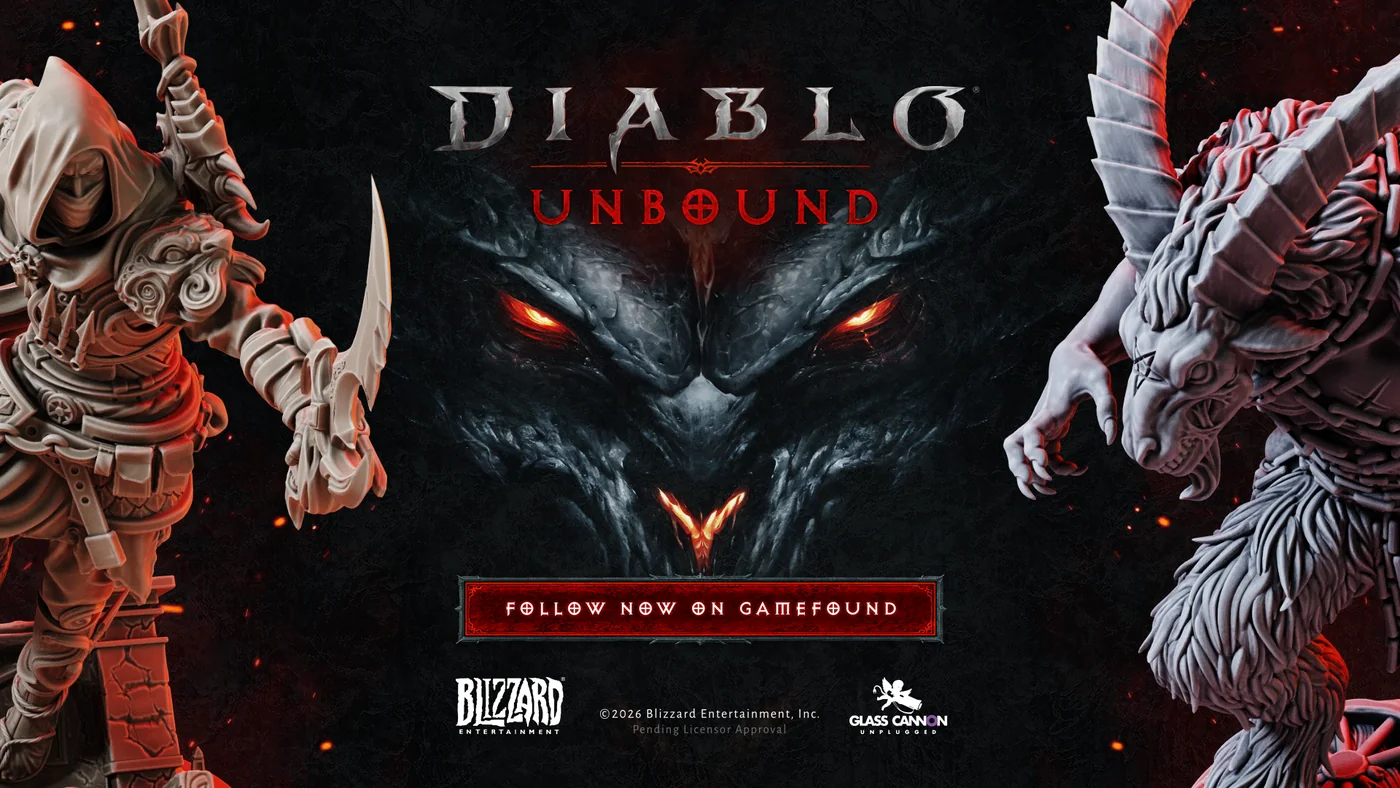
The four launch classes at a glance
This is the complete set of comparable facts that exists as of 22 October 2026.
| Class | Skill tree | Dedicated components | Abilities and numbers | Playstyle detail |
|---|---|---|---|---|
| Barbarian | Confirmed | Confirmed | Unknown | Unknown |
| Rogue | Confirmed | Confirmed | Unknown | Unknown |
| Sorceress | Confirmed | Confirmed | Unknown | Unknown |
| Paladin | Confirmed | Confirmed | Unknown | Unknown |
Four rows and three columns that are identical across all four rows. That table is the honest state of knowledge, and it is also why this hub carries the comparison instead of a separate matrix page: a matrix with four identical rows is not data, it is a shape.
What the table does tell you is real, though. "Dedicated components" means each class is not a card overlay on a shared board — it implies class-specific decks or dashboards, which in a cooperative game usually means genuinely different decision spaces. "Skill tree" implies in-run progression with branching, and the Town Phase respecialization (covered in the guide section) implies you are meant to change branches mid-campaign.
Where to start
If you want to know which class to play first — read the four class pages in this order: Barbarian, Rogue, Sorceress, Paladin. Each page states what is confirmed, what the video game version might lead you to expect, and where the two diverge because nothing has been announced.
If you are deciding whether the game has enough variety — the answer lives in the components, not the names. Four classes with four separate subsystems is a substantial replayability claim; the structure section explains how Torment mode multiplies it by letting you recombine dungeons, monster families and bosses.
If you are comparing this to Diablo IV — stop and read is it a board game first. The class names are shared with the video game, the mechanics are not, and expectations carried over from an action RPG will mislead you on almost every page in this section.
Every class page in this section
| Page | What it answers | When to read it |
|---|---|---|
| Classes — this hub | The four classes side by side, and the limits of the comparison | First |
| Barbarian | What is confirmed about the Barbarian, and what is blank | If you like direct melee pressure |
| Rogue | What is confirmed about the Rogue, and what is blank | If you like flexibility and positioning |
| Sorceress | What is confirmed about the Sorceress, and what is blank | If you like ranged spellcasting |
| Paladin | What is confirmed about the Paladin, and what is blank | If you like support and defence |
Each of those four pages carries the same explicit structure: confirmed facts with sources, the video game expectation that may not transfer, and an open-questions block. None of them claims an ability, a stat, a card count or a damage number, because none exists in public form.
Why there is no tier list here
Ranking four classes requires at least one axis of comparison: damage, survivability, action economy, synergy with other classes, or difficulty for new players. Every one of those axes needs numbers. There are no numbers.
A ranking built without numbers is a ranking built from the video game's reputation — the Barbarian is tanky, the Sorceress is fragile but bursts, the Paladin supports. That vocabulary is accurate for Diablo IV and unverified for a cooperative board game where a "tank" might mean an aggro-managing deck rather than a health pool. The most common failure we see in pre-release coverage is exactly this: importing a video game tier list into a tabletop product and calling it a preview.
There is a second reason. The publisher has said more classes will be added through stretch goals and expansions. A ranking of four launch classes would be invalidated by the campaign itself within months. Better to publish nothing now and publish something defensible when the rulebook and the first play reports exist.
How to choose a class with the information that exists
You can still make a useful choice, using three legitimate signals.
Signal one: the components. Each class has its own. If the campaign page later shows four visually distinct dashboards, that is evidence of four genuinely different subsystems rather than four variants of one. Watch the campaign updates for component breakdowns; that is where the real comparison will first become possible.
Signal two: respecialization. Because the Town Phase allows respec, your class choice is less permanent than in most campaign games. That lowers the cost of picking "wrong" and makes the first pick more about which subsystem you want to learn than about optimisation.
Signal three: player count. If you usually play solo or two-player, class synergy matters less and self-sufficiency matters more. The solo page covers what is and is not known there.
What you should not use as a signal: the video game's class fantasy. It may turn out to align. It has not been stated that it does.
What would change this page
Three things, in order of likelihood. First, the campaign page publishing component lists and class dashboards — that would let us write a real comparison of decision spaces without inventing numbers. Second, a published rulebook or a demo rulebook excerpt from SPIEL Essen attendees, which would give ability text. Third, review copies, which typically arrive weeks before fulfilment and would finally make balance claims possible.
When any of those land, this hub gets rewritten rather than patched, and the four class pages get a comparison table underneath the confirmed facts. Until then the pages stay honest and short.
Three mistakes we see most
Assuming the class names mean the same thing as in Diablo IV. Shared names, shared lore, different medium. A board game Barbarian is defined by a deck and a skill tree you can hold, not by a resource generator.
Reading "skill tree" as "the video game's skill tree". A tabletop skill tree is usually a small branching track with 6–12 nodes and respec support. It will not have dozens of passives.
Treating the four launch classes as the final roster. Stretch goals and expansions are confirmed to add more. If a fifth class is what you are waiting for, following the campaign is the only way to know whether it unlocks.
Start with the Barbarian page if you want to see how much detail a class page can honestly carry today, then work through the other three. If the level of "unknown" feels unsatisfying, that is the accurate feeling for a game whose rulebook is not out yet — and the guide section explains why that is normal rather than a red flag.
Where to go next
Class choice is one decision inside a larger loop:
- How to play — the seven steps, of which class selection is step one
- Rules — why ability text is not available yet
- Acts and structure — how four classes and nine levels combine into replayability
- Loot and treasure — gear progression, and why no build guides exist
- Treasure Goblin — the one loot source tied to the campaign
- Release and availability — when class components can actually be seen
- Compared — class names shared with Diablo IV, mechanics not shared
If you are choosing today, pick the subsystem that sounds most interesting rather than the class that sounds strongest. Strength is unknowable until the rulebook exists; interest is the only variable you can actually evaluate right now, and respecialization means the choice is not permanent.
Diablo Unbound Barbarian Class Guide and Starting Details
Explore the Diablo Unbound Barbarian, one of four confirmed launch classes. See what the publisher said about its skill tree, components and unknowns.
Read moreDiablo Unbound Paladin Class Overview, Launch Timeline and Rules
Explore the Diablo Unbound Paladin, one of four confirmed launch classes. See confirmed components, the 2027 release window and what remains unannounced.
Read moreDiablo Unbound Rogue Class Guide: What We Know So Far
Learn about the Diablo Unbound Rogue, one of four launch classes in the co-op board game. Confirmed details, unknown abilities and the 2027 release window.
Read moreDiablo Unbound Sorceress: What We Know About This Magic Class in the Board Game
Discover the Diablo Unbound Sorceress, one of four confirmed launch classes in the cooperative dungeon battler from Glass Cannon Unplugged and Blizzard.
Read more